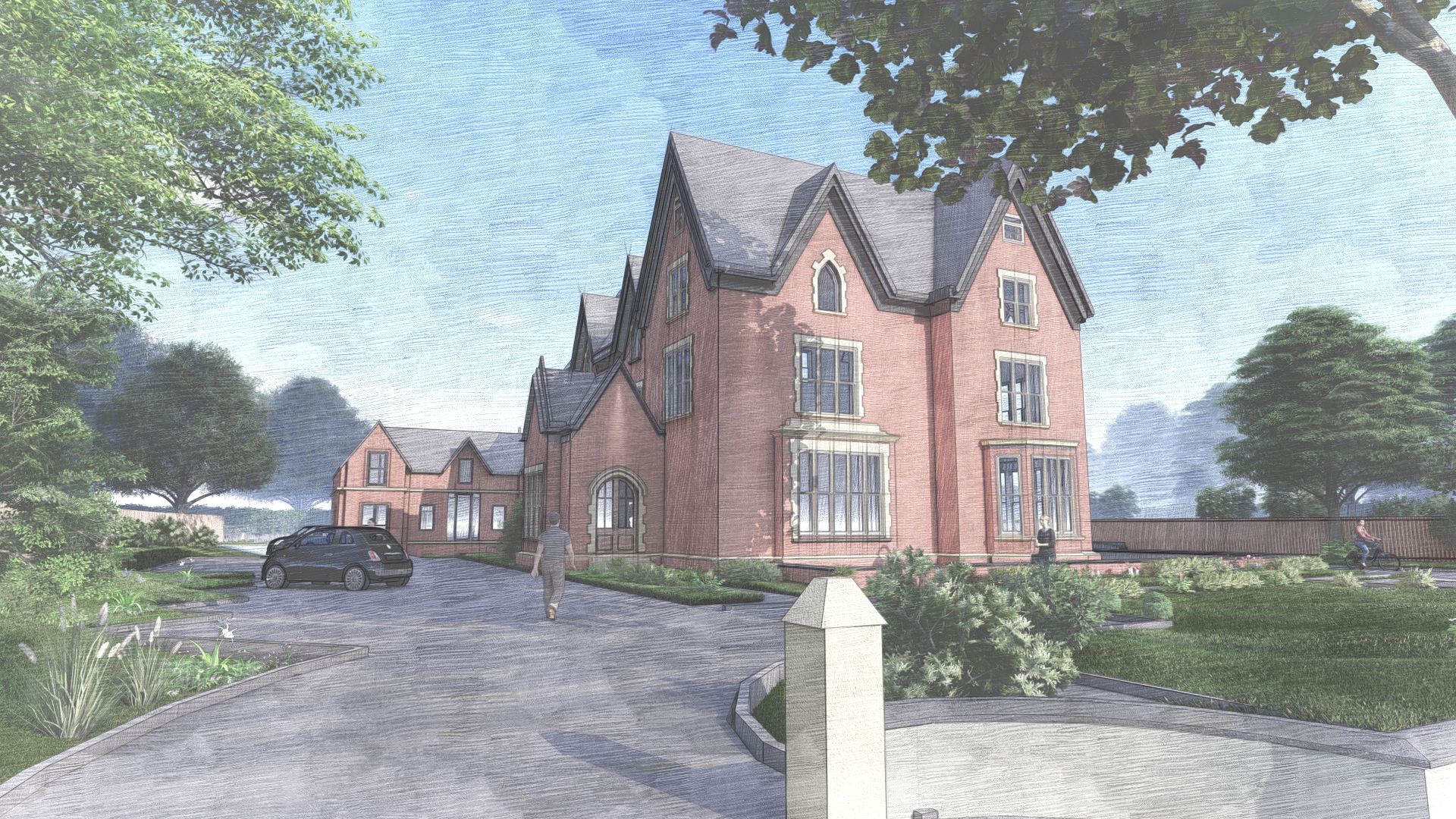
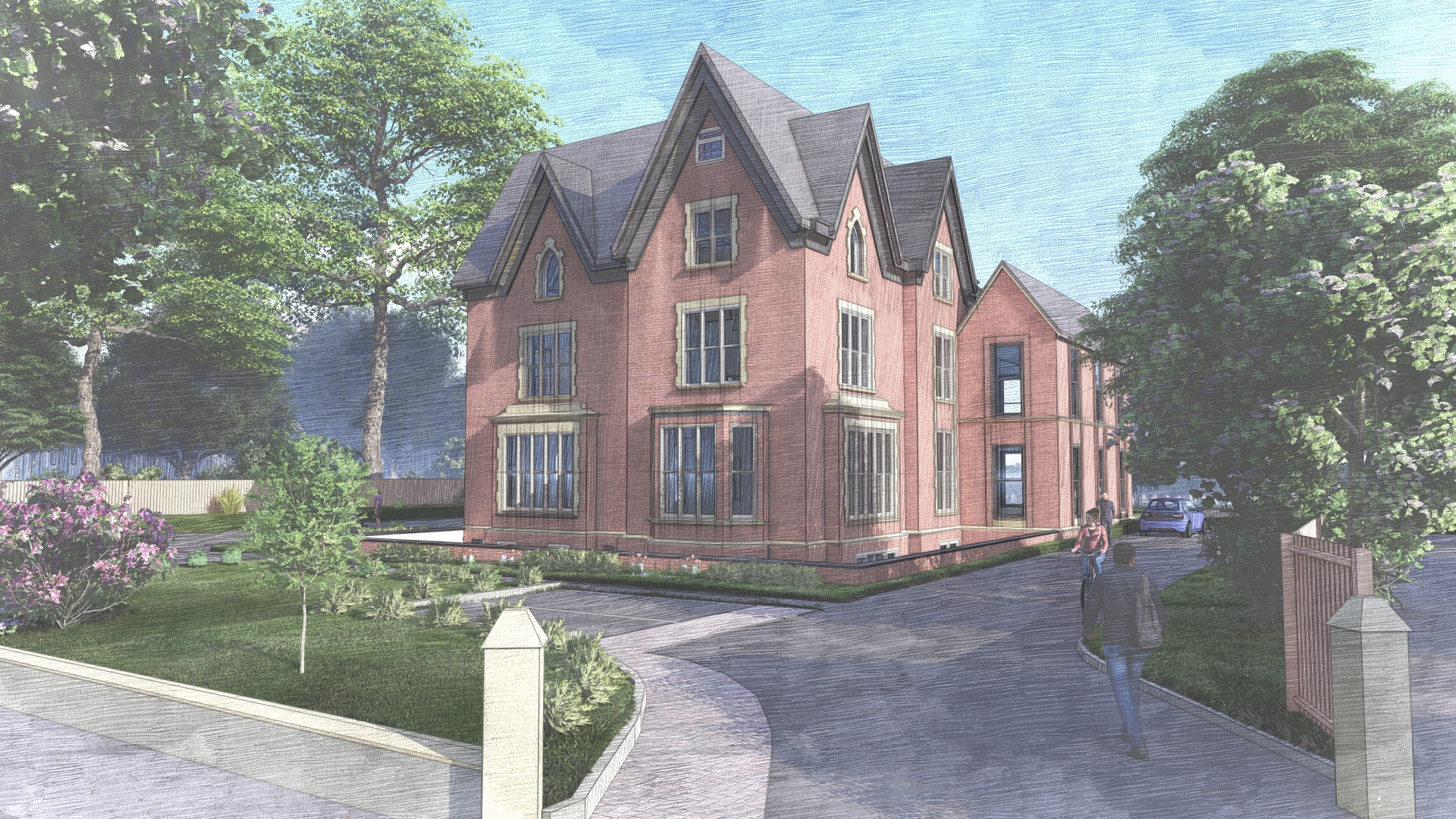
The scheme will offer 20 residential apartments with associated parking and
landscaping, through the provision of two distinct, but associated
propositions: the refurbishment and extension of the existing three storey
building, comprising 14 one, two and three bed apartments and the
erection of a new three storey apartment building to the rear of the site,
housing six, two bed apartments.
The original building will be
retained and restored where possible and the numerous sub-standard late 20th
Century additions, will be removed and replaced with a higher quality
extension, which complements the adjacent heritage asset in a more
contemporary way.
Consequently, the design takes cues from the building’s architectural
features and materials. The
gables, which are a prominent feature of the
main house, are repeated on the new extension, albeit at a smaller scale to
be subservient to the host building.
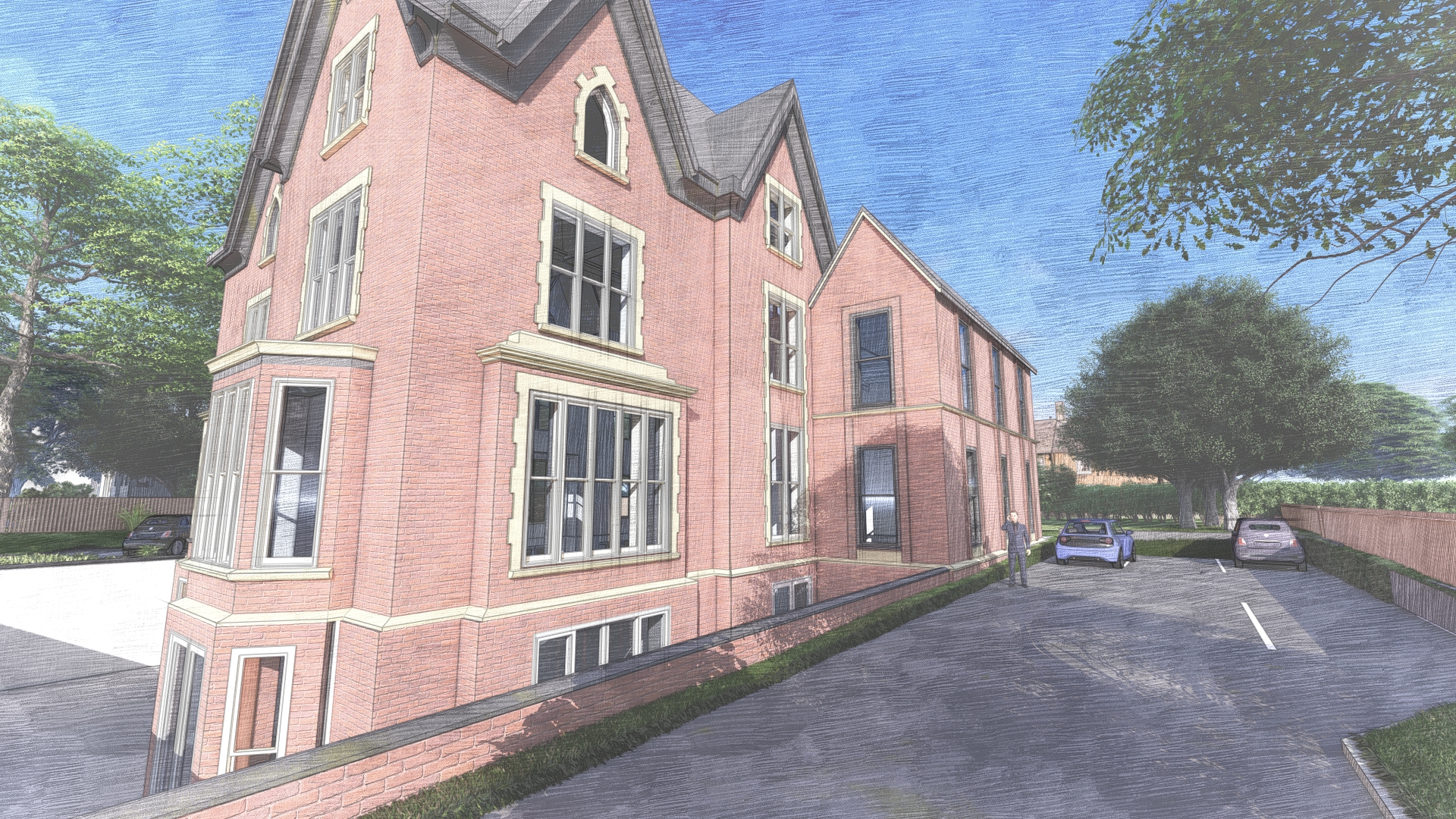
Large window openings with a clear vertical emphasis, echo the proportions
of the existing windows.
Opening sizes sequentially diminish on upper
storeys, similarly to the window hierarchy evident on the original building.